For patients and families in hospital, one of the most stressful questions is simple: What happens next?
At Trillium Health Partners, frontline teams are working to answer that question more clearly and consistently - helping patients feel more informed and prepared as they approach discharge.
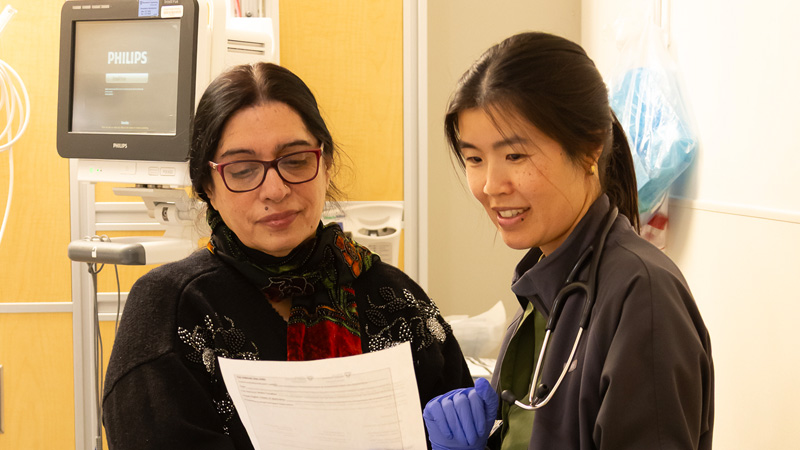
Through a quality improvement project supported by the Quality Improvement Experiential Student Training (QuEST) program, teams on two inpatient units are testing new ways to strengthen communication about discharge planning and next steps in care.
“We know that patients and families don’t always feel they’re getting timely or clear updates about what to expect next,” says Dr. Kevin Gitau, General Internal Medicine Physician and Faculty Chair of the QuEST program. “This work is about creating a more reliable process so that those conversations happen regularly and in a way that patients and families can understand.”
The project is helping frontline team members build new practices into their daily routines - from confirming and sharing estimated discharge dates during interprofessional rounds, to using tools within the hospital’s electronic patient record to prompt and track those conversations. Together, these changes are helping ensure information doesn’t stay within the care team but is consistently shared with patients and families.
Volunteers and co-op students are also supporting the work by helping track when updates are shared and gathering feedback directly from patients and families, giving teams real-time insight into what’s working and where improvements are still needed.
Today, between 70 and 90 per cent of patients on participating units now have planned discharge dates and next steps clearly shared through bedside communication tools, such as whiteboards in patient rooms, and conversations with the care team - a meaningful shift from more variable communication in the past.
Beyond improving the patient experience, the project is helping build a culture of continuous improvement by giving frontline teams practical skills to identify challenges, test solutions, and measure impact as they deliver care.
Looking ahead, teams are continuing to refine the approach and explore opportunities to expand it across the hospital - helping create a more connected and people-centred experience for patients and families.